
Related Posts

Looking for fast and reliable appliance repairs?
Tips for Repairing and Maintaining Household Appliances
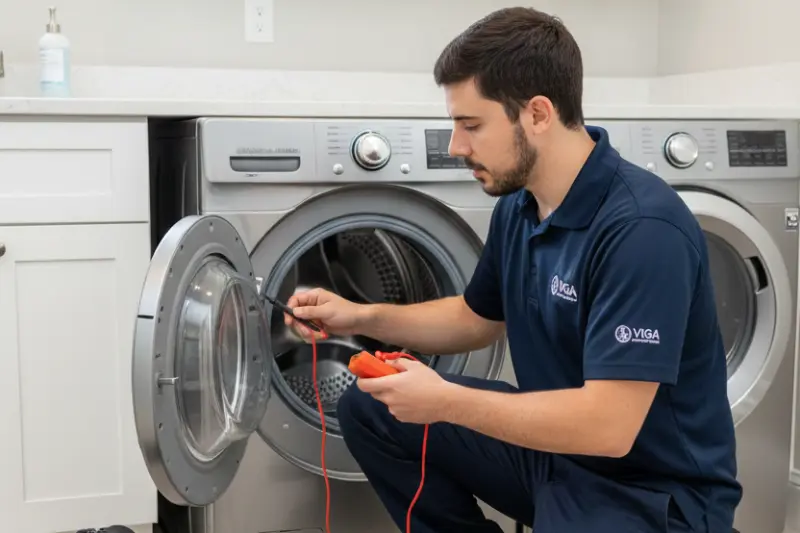
Keeping your appliances in good working order saves you time and money. Regular maintenance prevents breakdowns and extends their lifespan. For example, cleaning refrigerator coils or dryer vents can improve efficiency and prevent costly repairs. In this guide, we share practical appliance maintenance and troubleshooting tips for major appliances: refrigerators, washing machines and dryers. We’ll highlight the most common signs of malfunction (such as “the dryer isn’t heating up” or “the washing machine isn’t draining”), simple solutions you can try, and when to call a certified technician.
Discover practical appliance maintenance tips to avoid costly repairs. From refrigerators, washer to dryers, learn how to spot early warning signs and keep your home appliances performing efficiently.
Refrigerator Maintenance and Common Issues
Maintenance Tips: Clean the condenser coils every 6 months to remove dust and dirt. This allows heat to escape properly so the compressor doesn’t overwork. Always set the freezer and refrigerator to the manufacturer’s recommended temperature. Arrange food so the vents are not blocked. Test the door gasket by closing the door on a piece of paper: if you can easily pull the paper out, it’s time to replace the seals.
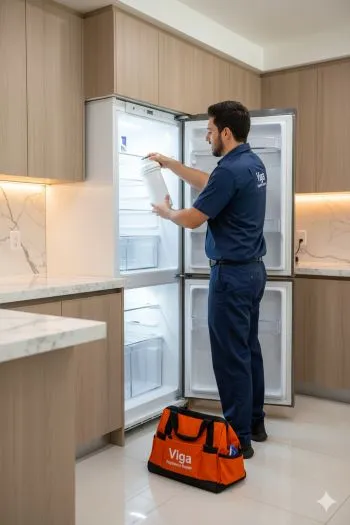
Common Problems: A faulty refrigerator often shows early warning signs. If the freezer is freezing up or the refrigerator door feels hot, it could be a faulty gasket or thermostat. Leaks are another red flag. Water pooling on the floor often comes from a clogged drain pan or defrost drain. Clear any ice or debris from the defrost hole and clean the pan under the unit. If basic repairs don’t work—for example, if the compressor is unusually noisy or the refrigerator suddenly stops cooling—it’s time to call a professional. Major problems such as refrigerant leaks or compressor failures require certified refrigerator repair services.
Washing Machine Maintenance and Common Issues
Maintenance Tips: Check the water hoses periodically for cracks or leaks. Hoses deteriorate over time; replace any that appear worn to prevent leaks. Clean the filters approximately every 3 months to ensure water flows freely. Use only the amount and type of detergent recommended by the manufacturer, especially in high-efficiency machines. Avoid overloading the washing machine, as excessively large loads put extra strain on the motor, belts, and suspension. After washing, leave the door open for about 30 minutes to allow the interior to dry and prevent moisture buildup; this helps prevent mold and mildew from accumulating on the door gasket.
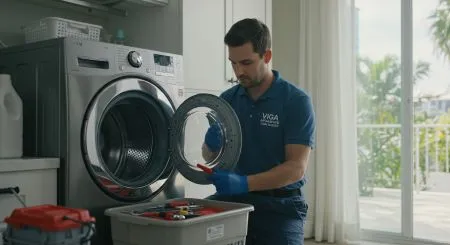
Common Problems: A frequent problem is that the washing machine won’t drain or spin. If your clothes end up soaking wet, first check for blockages. Remove the drain hose from the back and look for kinks. Clean the drain pump or filters. Check the door switch. If you’ve tried these solutions and the washing machine still won’t drain, or if you see error codes or leaks, it’s time to call a professional. Complex problems, such as broken drain pumps, belts, or recirculation hoses, require expert repair. Certified technicians can quickly replace faulty parts and get your washing machine working properly again.
Dryer Maintenance and Common Issues
Maintenance Tips: Always keep the dryer lint filter clean by removing lint after each load. You can also vacuum the area around the dryer every 3 months. It is very important that the vent system is clear: disconnect the vent hose annually and use a brush or vacuum cleaner to clear lint from the vent to the outside. A free-flowing vent prevents overheating and the risk of fire, and also helps the dryer heat properly.
Common Problems: The classic symptom “the dryer isn’t heating” usually means an airflow or heating problem. If clothes are taking too long to dry or the dryer drum feels hot to the touch, inspect the vent and filter for blockages. Reduced airflow causes the dryer to overheat and stop heating. Also check the thermal fuse or heating element; if they fail, the dryer will run, but it won’t heat. If the dryer spins but stays cool, cleaning the vent and replacing the faulty heating element or fuse may solve the problem. However, if you smell something burning or the unit stops mid-cycle, unplug it and call a qualified technician. It’s recommended to clean the ventilation ducts every 6 to 12 months to prevent lint buildup.
Why Choose VIGA Appliance Repair?
DIY repairs are great for routine maintenance, but certified technicians have the training and tools to handle more complex problems. If basic troubleshooting doesn’t solve the problem (for example, if your refrigerator still isn’t cooling after cleaning the heating elements, your washing machine won’t spin after unclogging the drain, or your dryer still isn’t heating), it’s time to contact a professional. At Viga Appliance Repair, we offer:
– Same-day service: We’re available to fix your appliance problems.
– Certified technicians: Our team is trained to handle any brand of appliance.
– Guaranteed work: All repairs include a parts and labor warranty.
– Transparent pricing: No hidden fees or surprises.
Call us today to schedule an appointment at (954) 225-8905.